Culture of the Empire of Splendour:
Arts and Entertainment, Bathhouses, Dragon Scales, Clothing and Costume
The Bathhouse
The Imperial Bathhouse is to some people a more potent symbol of the Empire of Splendour than the Divine Flame, the heavy emboidered robes of a Magister or the triple-sun banner of the Emperor. Every Imperial city, and many smaller settlements, have a bathhouse. They are usually ornately decorated buildings with three rooms of progressing heat (Spring, Summer and Autumn Chambers) and usually a steam room and a plunge pool at the very least. The larger bathhouses also have heated swimming pools and a gymnasium area for exercise. Imperial citizens like to come to the bath house to relax, gossip, do business and sip chilled teas. Since a trip to the bathhouse is conducted in the nude, the sexes are normally segregated by time: women in the morning, men in the afternoon. Children may accompany either parent until the age of 10, whereby they must then go to the correct session. In some places, Oksa and Denra-Lyr notably, mixed bathing is normal.
Clothes and Costume
Everyday wear for an Imperial citizen is made from linen or coarse silk, with leather garments for hard wear and wool or waxed outer wear for cold and wet weather. Men and women commonly wear loose trousers and shirt.
For more formal occasions, the lashong is worn. This is a long robe made from silk. Men wear the lashong open, over a trouser/shirt combination. Women tie it closed with a silk sash. The particular style of the lashong changes with fashion. Current trends are for simple patterns with large areas of primary colours, and quite tight sleeves. Loose sleeves, large collars and elaborate patterns all indicate an older style.
The roabha is the official garment of a Magister. These are very heavy robes with wide sleeves, high collars and usually with a matching pill-box hat. They are elaborately decorated with symbols, images and colours relevant to the Magister's rank. A Magister of Dawn and Birds, for example, might wear a roabha decorated with scenes of birds in trees or in flight against a rosy dawn sky. It is highly illegal for anyone not of Magisterial rank to wear a roabha.
The pentesh originates from the northern mountainous province of Ut'Bharma. It is a quilted vest, typically stuffed with tembu or noyaki hair. It has become something of a fashion item in other Imperial provinces, with less padding and more decoration. It can function as padded armour, so it is popular amongst the upper classes who fear assassination.
The lorazor is a broad-brimmed waxed leather hat originally from Denra-Lyr. It is very useful for rainy days.
Dragon Scales
Dragon Scales are triangular playing pieces that form the basis of many different pastimes in the Empire. They are commonly made from wood or ivory, but a famous set was presented by Emperor Received Wisdom to the Great Mother of the salsham'ai, made from elaborate gold filigree and gems.
A dragon scale piece has the colour of its suit on one edge (red, yellow, green, blue and black), and marks denoting its value along the other two edges. Pieces are valued from 1 to 8, and up to 4 markings are given per edge. The One of any suit has a blank edge.
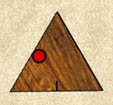 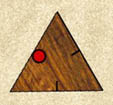 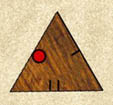 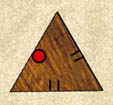 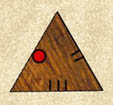 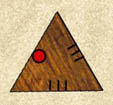 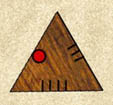 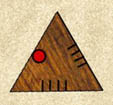
Dragon scales are used for any number of games, from Skin (similar to dominoes) to the complicated game of Four Corners (closer to bridge). No drinking establishment in the Empire is without the background clicking of a dragon scales game going on.
Arts and Entertainment
When Imperial citizens aren't playing dragon scale games, they enjoy a good spectacle. In Llaza the racecourse is a popular venue, in Reflected Glory fighing style bouts are popular, especially the annual Festival of the Seven Angry Shri. Theatre is a relatively new pastime to the Empire. It originates from re-enactments of popular myths for edification and religious purposes, usually taking place inside or in front of a temple complex. The move to theatre as entertainment in its own right began in the reign of Emperor Chorus of Many Birds with the playwright Nebherstaal. New stories with human characters, props, costumes and eventually purpose-built theatres came into being in a rush of novelty. As things do in the Empire, eventually this became codified into the very serious High Imperial theatre with highly stylised costumes and roles, little different from the original ceremonial performances. From time to time young actors and playwrights endure the wrath of traditionalists by re-interpreting classics or breaking free from traditions.
Kunubara is a form of dance-poetry from Oksa, where every move carries meaning. It is popular throughout the Empire and again varies between highly traditional forms enjoyed by serious enthusiasts to more salacious forms where skimpy costumes are more important than precise movements.
Music is traditionally in the form of the Four Voices of Heavenly Concordance, a collection of musical instruments corresponding to the geomantic animal gods. Stone chimes, bagpipes, water chimes and harp are combined in traditional, stylised forms. Radical interpreters add in 'new' instruments like the salsham'ai charo, dronish woodwind or Obrenje choral singing.
Popular art forms emphasize control over nature, order over chaos. Breeding animals such as the bird-lizard shri to elaborate ornamental breeds, growing miniature trees, flower arranging and even landscape gardening are all favoured pastimes amongst the wealthy. Surface tension mosiacs, where one builds a picture of tiny tiles on the surface tension of a bowl of water are a recent fad. Ornamenting the self is another modern favourite with some adherents undergoing magical alteration in the hunt for perfect beauty.
(c) 2006 The Creative Conclave.
Contact us.
|
Links
Denra-Lyr
Empire of Splendour
Imperial Calendar
Imperial Culture Part One
Race, social order, language, geomancy, the Nine Arts, births, marriages and deaths.
Imperial Culture Part Two
Law and order, magic, Imperial Couriers, travel.
Imperial Government
Imperial Provinces
Imperial Religion
Money
Noyaki
Obrenaja
Oksa
Salsham'ai
Shri
Tembu
Ut'Bharma
Discuss this article
Slang
The Imperial Bathhouse is responsible for a variety of slang terms in common use in the Empire. To say that something is steamy is to imply that it is important, worthy of discussion in the bathhouse. It carries less of a connotation of juicy or salacious gossip than in English. Because the bathhouse is a costly luxury, poorer aspirants to social success such as lowly Magisters or tradesmen are referred to disparagingly as weekend bathers; they can only afford a weekly trip, not a daily one. To say of a man that he is an morning bather is to call him womanly, weak, ineffectual and possibly homosexual. There is a reverse situation, that of a woman termed an afternoon bather but it is used less often.
From Dragon Scales comes the term showing a blank. This comes from games like Skin, where players must match the sides of pieces. The blank, as on the One of any suit, is the hardest to match and so the expression means to stymie, to block. Red is considered an unlucky colour in the Empire, whereas yellow is lucky (the associations come from dusk and dawn, representing the death and birth of the Celestial Emperor respectively). To have drawn a red or drawn a yellow means to be unlucky or lucky, respectively. In some games the yellow suit is considered high value and the red low.
Instruments
The instruments that make up the Four Voices of Heavenly Concordance bear closer inspection. The stone chimes, or bharmanshan are a collection of axehead-shaped, rounded stones of different sizes suspended from a central frame, and struck with beaters.The bagpipe, or coronshan is also used as a martial instrument. Coronshan vary in size and pitch, but are closer to older Irish and Scandinavian types than modern Scottish pipes. The lapsharal are a collection of metallic bowls filled with water, struck with beaters like the stone chimes. Effects can be created by moving the water whilst striking the bowls. The vormonshan is a harp or lyre-like string instrument played by plucking. Strings are often coloured orange or red to symbolise the fiery mane of Ruby Horse.
|


